








April 25, 2023 | permalink

Climate Alpha has launched HOMES, the first free tool of its kind to forecast the climate change-adjusted valuation of a home several decades into the future. Unlike other tools that offer numerical risk scores, ours puts a fine point on how much climate change will cost you. From the press release:
Climate change is already a real and growing concern for American homeowners — 64% cite it as a reason to move from their current communities, and 62% say they are reluctant to move somewhere at risk of natural disasters.
HOMES invites users to enter an address or ZIP code which calculates the projected median home value in that area for a given year. It then calculates the price impact due to climate change both in dollars and as a percentage of the home’s total value. Users can compare the resilience of a given area against its surrounding county, state, or national price impact.
In addition to calculating a location’s changing exposure to climate risks such as flood, storms, drought, heat and fire, HOMES also displays vulnerability scores related to poverty and infrastructure as well as readiness scores related to clean energy and public spending.
This unique combination of climate data and models with decades of market trends and socioeconomic variables, powered by Climate Alpha’s AI-trained analytics suite, creates a more complete picture of where Americans will choose to move — and what homes they are most likely to buy — than any product currently on the market.
What are you waiting for? See for yourself how much your home — or your Zillow dream listing — will gain or lose due to climate change.
April 21, 2023 | permalink
Video of the aforementioned MIT book launch of Design & Solidarity has been posted on MIT Architecture’s YouTube channel (as one does). Click to the 22:30 for my cameo appearance as MC of the event’s lightning talks.
April 16, 2023 | permalink

If you happen to be Cambridge at 6 PM on April 20, please join us for a conversation, celebration, and catered reception to launch Design & Solidarity (Columbia University Press, 2023), a book exploring the power of design, art, and architecture in shaping emergent forms of mutualism, fulfilling their promise of solidarity, and ensuring that these values endure.
Starring:
Marisa Morán Jahn, Artist; Director of Integrated Design at Parsons/The New School
Rafi Segal, Architect; Director, MIT SMArchS Urbanism Program
In Conversation with:
Arturo Escobar, Design Anthropologist; Author, Designs for the Pluriverse
Greg Lindsay, Senior Fellow, MIT Future Urban Collectives
Mercedes Bidart, Entrepreneur; Co-Founder, Quipu
Rashin Fahandej, Multimedia Artist, Filmmaker
Moderated by:
Ana Miljacki, Critic, Curator, Director, MIT Architecture and Urbanism Group
With remarks from:
Sarah Wolozin, Director of MIT OpenDocLab
Jules Sievert, Artistic Director, NuLawLab, Northeastern University
April 14, 2023 | permalink

Fast Company asked me to moderate a session on quantum computing and “high performance computing” (read: supercomputing) at their recent Future of Hybrid Cloud 2023 virtual summit in partnership with IBM. Click through to watch my fireside chat with Katie Pizzolato, director of quantum theory and computational science at IBM Quantum, and Hillery Hunter, CTO & GM of innovation at IBM Infrastructure. Here’s the session description:
The first phase of quantum computing involved proving the scientific theories could be translated to reality. High-performance computing used to mean supercomputers the size of small buildings. Now, zettabytes of data flow through the cloud to access quantum and high-performance computing to solve the most complex business challenges quickly, enabling faster insights and a competitive advantage. Learn what this means for the future of business from some of the leading minds in the field in this forward-thinking panel discussion from The Future of Hybrid Cloud 2023 event.
March 31, 2023 | permalink

Huge’s Ian Volner was kind enough to quote me in his report from South by Southwest about the starchitect Bjarke Ingels and his latest project: a 3D-printed luxury resort in Marfa, Texas designed in conjunction with the tech/construction company ICON.
Volner gamely reports on their ambitions to use the resort as a testbed for lowering the costs of housing construction, but he’s skeptical, as am I:
So can 3D printing finally crack the code? Only a few months before the Initiative 99 announcement, BIG and ICON broke ground on a 100-house development in Georgetown, Texas. Comprising single-family dwellings of the old-fashioned, gable-roofed type, the project certainly looks marketable, but with starting prices around the $450,000 mark, it hardly appears to be a silver bullet for America’s affordability crisis. As Greg Lindsay puts it, the near-term architectural impact of computer-guided construction is likely to remain somewhat abstract, producing “shapes and aesthetics” that can “build more excitement than a 3D-printed subdivision.”
March 29, 2023 | permalink

The Pennsylvania Association of Realtors™ was kind enough to invite me to speak at their monthly Webinar series in March. Past president Chris Beadling grilled me for an hour on the post-pandemic future of cities, work, retail, climate change-driven migration, “ghost kitchens,” AVs, and much, much more. Needless to say, I had a lot of thoughts:
Exciting is how Lindsey described the future of the office space. “One of the ideas that has been lying around since before the pandemic is of co-working spaces closer to home, having this palette or portfolio of workplaces to go to vs. a singular office. We’re starting to think about these remote work centers. I think there’s a whole new wave of opportunities that we could see that people as employers follow talent closer to home in the suburbs or exurbs, or wherever people choose to leave and live. But again, we’ve barely begun to scratch the surface,” he said.
Lindsey thinks small cities will benefit the most from COVID-19 changes. He said that most people prize smaller, walkable cities, that have an urban feel and character to them, but don’t have the downsides that comes with city living. He noted that as millennials age, they are looking for places to raise their children, leading them to places like Harrisburg and Pittsburgh, though he did point out that he thinks “Philly is the most underrated city in America” when it comes to cost of living vs. amenities.
“A lot of that urban life is was hit hard during the pandemic,” he said. “It became very evident that if you were a millennial, you wanted to stay in cities, but there’s very little housing stock geared towards you. You have to pay an incredible premium for that and many cities were content to simply push you out into the exurban periphery. Cities need to think about.”
Mixed-use buildings may also be the way of the future. Combining office space with retail and restaurant spaces can be successful, Lindsey said. “Design big indoor and outdoor bars and barbecue restaurants and then put in flex workspaces around it. I love the idea you bring your kids there. You’d have a pint of a micro brew and then maybe you’ll write some emails while you’re there and I think that points to some interesting ideas about like socializing comes first. Then you stay in the area and do these other things, so it’ll be interesting.”
You can read the entire recap here.
March 16, 2023 | permalink

Fast Company recently invited me to host the first of three virtual panel discussions on digital twins and the “industrial metaverse” (a subject near-and-dear to my heart). From the recap:
“With a digital twin, we don’t have to build prototypes to see how things will work,” said Barbara Humpton, president and CEO of Siemens USA. “We can experiment using the laws of physics before making decisions about what we want to build—which for an auto manufacturer can mean designing a vehicle 50% faster.” Humpton’s remarks were made as part of a panel on the industrial metaverse hosted by Fast Company in partnership with Siemens. She was joined by Richard Kerris, head of developer relations at Nvidia — which offers its “Omniverse” development platform to partners such as Siemens — and Michael Campbell, chief product officer at Bentley Systems. Their session was introduced with a fireside chat with Cathy Hackl, chief metaverse officer at Journey and author of Into the Metaverse.
March 05, 2023 | permalink

Design & Solidarity is the new book by my friends and Venice Architecture Biennale colleagues Rafi Segal and Marisa Moran Jahn exploring the power of design, art, and architecture in shaping mutualistic initiatives, fulfilling their promise of solidarity, and ensuring those values endure.
Consisting mostly of interviews with visionaries such as the National Domestic Workers Alliance’s Ai-Jen Poo; Platform Cooperativism Consortium founding director Trebor Schulz; political philosopher and Empire co-author Michael Hardt, among many others, the book also includes my short oral history of pandemic-era mutual aid efforts.
Join us at The New School for the official launch on March 7 — register here! — or at MIT on April 20. More events to come!
February 28, 2023 | permalink

California, once the epitome of car culture, is again on the front lines of the American mobility revolution, and I’m thrilled to have contributed a chapter to the extraordinary new book Renewing the Dream: The Mobility Revolution and the Future of Los Angeles, edited by my friend James Sanders and published by Rizzoli on September 19.
He invited me to join a murderer’s row of contributors including UCLA’s Donald Shoup, Michael Manville, and Eric Avila, along with Woods Bagot CEO Nik Karalis, policy expert Mark Valliantos, and the renowned architecture- and design critic Frances Anderton. Description below; preorder here!
Drawing together original research, design studies, and cultural essays, Renewing the Dream offers the first comprehensive look at the changes remaking the mobility landscape of Southern California—and the opportunities to reappropriate vast tracts of the city for new uses. Edited by James Sanders and produced with the global architecture studio Woods Bagot, this book explores the forces propelling this shift as well as its controversial impact on Los Angeles, as a city once famed for its car-oriented, low-rise landscape is transformed into a more diverse, more dense, more complex place.
This many-sided portrait offers essays by a distinguished group of writers, designs for the city’s future, and studies of how the new mobility might allow areas now dedicated to parking and gas stations to be reimagined. Rounding out its portrait are historic photographs, maps, Hollywood images, and the artwork of David Hockney, Catherine Opie, Ed Ruscha, Wayne Thiebaud, Carlos Almaraz, and stills from La La Land to Chinatown. The book is a thought piece on the future of American cities, with lessons that will carry resonance all around the globe.
February 28, 2023 | permalink

I’m thrilled and delighted to be among the roster of voices consulted for frog’s new report on the future of urban mobility, The Road Ahead. From the introduction:
Learn how mobility leaders are driving customer experiences forward. Creating a position in this new frontier of personalized in-car interactions, immersive buying experiences and wholly new mobility-enabled services will mean putting customers in the driver’s seat. In a new frog report, we ask experts to dig into the conversation around connected mobility, autonomy paradigms and electric vehicles of all types—as well as the new customer experiences and business ecosystems these modalities will inspire.
You can download the entire report here. Listen — or read — my extended interview with frog’s executive creative director Sean Rhodes on frog’s “Design Mind” podcast supporting the report. Here’s a brief excerpt:
I guess the theme for me with urban mobility is what makes a good or functioning city? There’s a great description by Luis Bettencourt, a physicist by training now at the Mansueto Institute, who says that a city is like a star. It’s a giant reactor where you can compress people in space and time to get fusion. Instead of light and heat like a sun, you get ideas and innovation and wages and people.
Transportation is the key to that compression. Mobility is our ability to compress ever greater numbers of people in space and time. The New York City Subway is probably the greatest machine in the United States for compressing people—it’s the keystone urban system that makes everything else possible.

» Folllow me on Twitter.
» Email me.
» See upcoming events.
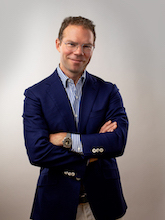
Greg Lindsay is a generalist, urbanist, futurist, and speaker. He is a non-resident senior fellow of the Arizona State University Threatcasting Lab, a non-resident senior fellow of MIT’s Future Urban Collectives Lab, and a non-resident senior fellow of the Atlantic Council’s Scowcroft Strategy Initiative. He was the founding chief communications officer of Climate Alpha and remains a senior advisor. Previously, he was an urban tech fellow at Cornell Tech’s Jacobs Institute, where he explored the implications of AI and augmented reality at urban scale.

----- | January 22, 2024
The Future of Generative AI in Architecture, Engineering, and Construction
----- | January 1, 2024
----- | August 3, 2023
CityLab | June 12, 2023
Augmented Reality Is Coming for Cities
CityLab | April 25, 2023
The Line Is Blurring Between Remote Workers and Tourists
CityLab | December 7, 2021
The Dark Side of 15-Minute Grocery Delivery
Fast Company | June 2021
Why the Great Lakes need to be the center of our climate strategy
Fast Company | March 2020
How to design a smart city that’s built on empowerment–not corporate surveillance
URBAN-X | December 2019
CityLab | December 10, 2018
The State of Play: Connected Mobility in San Francisco, Boston, and Detroit
Harvard Business Review | September 24, 2018
Why Companies Are Creating Their Own Coworking Spaces
CityLab | July 2018
The State of Play: Connected Mobility + U.S. Cities
Medium | May 1, 2017
Fast Company | January 19, 2017
The Collaboration Software That’s Rejuvenating The Young Global Leaders Of Davos
The Guardian | January 13, 2017
What If Uber Kills Public Transport Instead of Cars
Backchannel | January 4, 2017
The Office of the Future Is… an Office
New Cities Foundation | October 2016
Now Arriving: A Connected Mobility Roadmap for Public Transport
Inc. | October 2016
Why Every Business Should Start in a Co-Working Space
Popular Mechanics | May 11, 2016
Can the World’s Worst Traffic Problem Be Solved?
The New Republic | January/February 2016

January 31, 2024
Unfrozen: Domo Arigatou, “Mike 2.0”
January 22, 2024
The Future of Generative AI in Architecture, Engineering, and Construction
January 18, 2024
The Promise and Perils of the Augmented City
January 13, 2024