<?xml version="1.0" encoding="utf-8"?>
<feed xmlns="http://www.w3.org/2005/Atom" xml:lang="en">

    <title type="text">Greg Lindsay | Blog</title>
    <subtitle type="text">Greg Lindsay | Blog:</subtitle>
    <link rel="alternate" type="text/html" href="http://s79457.gridserver.com/" />
    <link rel="self" type="application/atom+xml" href="http://www.greglindsay.org/{atom_feed_location/}" />
    <updated>2010-08-24T23:51:02Z</updated>
    <rights>Copyright (c) 2010, Greg Lindsay</rights>
    <id>tag:s79457.gridserver.com,2010:08:24</id>


    <entry>
      <title>The Master Plan: A City in the Cloud</title>
      <link rel="alternate" type="text/html" href="http://www.greglindsay.org/blog/the_master_plan_a_city_in_the_cloud/" />
      <id>tag:s79457.gridserver.com,2010:/2.109</id>
      <published>2010-08-24T23:42:01Z</published>
      <updated>2010-08-24T23:51:02Z</updated>

      <content type="html"><![CDATA[
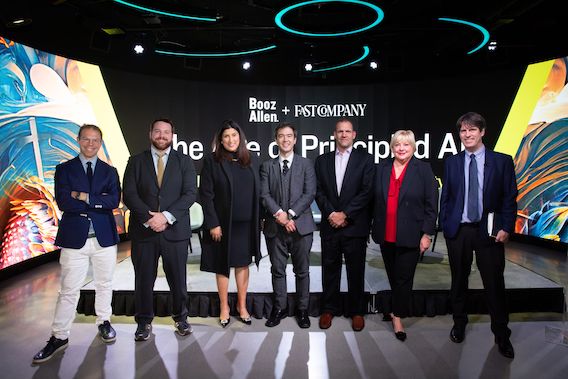
        <p><img src="http://s79457.gridserver.com/graphics/planit_thumb.png" alt="image" width="568" height="311" /></p>

<p><i>(Originally published on <A HREF="http://www.fastcompany.com/1684055/a-city-in-the-cloud-living-planit-redefines-cities-as-software">FastCompany.com</A>, August 23, 2010.)</i></p>

<p>When did Silicon Valley become so obsessed with building cities? Last month it was Cisco’s SVP of strategy Inder Sidhu describing the company’s smart city play as the $36 billion company’s “<a href="http://www.fool.com/investing/general/2010/07/21/ciscos-greatest-opportunity-and-greatest-challenge.aspx">biggest opportunity</a>.” Then, at the inaugural <a href="http://techonomy.com/program-outline/">Techonomy conference</a> a few weeks ago, an all-star roster of techies, VCs, and scientists pondered “cities as solutions.”</p><p>

Physicist and former Sante Fe Institute president Geoffrey West practically stole the show <a href="http://techonomy.typepad.com/blog/2010/08/the-math-of-life-growth-pain-on-scale.html">with his talk</a> on urban metabolisms. Cities are like organisms, he explained, except they grow much faster and much bigger than anything living – in fact, there appears to be no upper limit to their size or propensity for innovation… or disaster. “Urbanization is the problem,” he said, “and it can also be the solution.”</p><p> 

These being Silicon Valley types, it was clear what that solution should be. “Copying 20th century cities in Dubai and Shanghai is crazy,” <a href="http://twitter.com/LFlanagan/status/20422864552">said</a> former Sony chairman Nobuyuki Idei in yet another session. “We need… a city OS” – a single platform managing power, water, traffic, security and any other urban system you can think of.</p><p>

Rest assured, Mr. Chairman, someone is working on it. But it isn’t Cisco, IBM, HP, Microsoft, or any other tech heavyweight. In fact, in the course of reporting <a href="http://www.fastcompany.com/magazine/142/the-new-new-urbanism.html">my story on New Songdo City</a> last fall, representatives of each company pooh-poohed the idea of a purpose-built urban operating system. They believed one would emerge eventually, albeit as the result of a messy convergence of competing standards – you know, the way things work in the real world. Leave it to a five-year-old start-up few people heard of to challenge that notion and to build its own smart city from scratch in the hills of Portugal near Porto – “PlanIT Valley.”</p><p><a href="http://living-planit.com/">Living PlanIT</a> (pronounced “planet”) is the brainchild of Steve Lewis and Malcolm Hutchinson, a pair of IT veterans who met when Lewis was still a top executive on the .NET team at Microsoft. Their ambition is twofold: to <a href="http://work.lt-studios.com/lp/Living%20PlanIT%20SA%20PlanIT%20Valley%20build%20sequence%2008-10-2010.wmv">build a prototype smart, green city in Portugal</a> that can be rolled out worldwide, and to drag the construction industry into the 21st century.</p>
      ]]></content>
    </entry>

    <entry>
      <title>At the airport.</title>
      <link rel="alternate" type="text/html" href="http://www.greglindsay.org/blog/flight/" />
      <id>tag:s79457.gridserver.com,2010:/2.108</id>
      <published>2010-08-21T20:32:05Z</published>
      <updated>2010-08-21T20:34:06Z</updated>

      <content type="html"><![CDATA[
        <p><img src="http://s79457.gridserver.com/graphics/IMG00198-20100820-1818_thumb.jpg" alt="image" width="568" height="426" /></p>

<p>Taken by my wife at Sea-Tac this morning.
</p>
      ]]></content>
    </entry>

    <entry>
      <title>Turbulence at 10: Has JetBlue Become Just Another Airline?</title>
      <link rel="alternate" type="text/html" href="http://www.greglindsay.org/blog/turbulence_at_10_has_jetblue_become_just_another_airline/" />
      <id>tag:s79457.gridserver.com,2010:/2.107</id>
      <published>2010-08-21T20:21:34Z</published>
      <updated>2010-08-21T20:25:35Z</updated>

      <content type="html"><![CDATA[
        <p><i>(Originally published on <A HREF="http://adage.com/article?article_id=145399">AdAge.com</A> on August 16, 2010)</i></p>

<p>NEW YORK (AdAge.com)&#8212;A week after rogue flight attendant Steven Slater quit his job at JetBlue by cursing out a passenger and exiting the plane in the most dramatic fashion possible, he has become a folk hero, while the airline has so far managed to escape the public&#8217;s wrath. 

</p><p>
&#8220;While we can&#8217;t discuss the details of what is an ongoing investigation,&#8221; <a href="http://blog.hellojetblue.com/blog/index.php/2010/08/11/sometimes-the-weird-news-is-about-us/" class="body" target="_blank">the airline wrote on its blog last Wednesday</a>, &#8220;plenty of others have already formed opinions on the matter. Like, the entire internet.&#8221;
</p><p>
This sort of thing was never supposed to happen on JetBlue. When the airline launched 10 years ago from its hub at New York&#8217;s John F. Kennedy International Airport, it promised &#8220;to bring humanity back to air travel.&#8221; Founder David Neeleman recruited flight attendants from every industry <em>except</em> other airlines&#8212;Slater&#8217;s meltdown after a 20-year career would have embarrassed him. 
</p><p>
JetBlue also appealed to a better class of passenger. A Delta Air Lines flight attendant once accused Mr. Neeleman of &#8220;stealing all the <em>nice</em>&#8221; ones. Upper East Side society types <a href="http://www.observer.com/node/48942" class="body" target="_blank">treated its flights to West Palm Beach as a flying jitney</a>. But it&#8217;s hard to square that early, glamorous image with the (still-unknown) passenger who reportedly disobeyed Slater&#8217;s instructions, hit him in the head with her suitcase and then unleashed a stream of invectives. (Although several passengers insist Slater instigated it.)
</p><p>
JetBlue promised to be better than that. Its employees believed they were special&#8212;&#8220;all that Kumbayah stuff,&#8221; as Mr. Neeleman once called it. JetBlue wasn&#8217;t just a name; it was a brand. Is that still true, or is the Steven Slater incident a sign of dry rot? Has JetBlue become just another airline, as deserving of its passengers&#8217; contempt as the others?
</p><p>
&#8220;It&#8217;s 10 years old, and the bloom is at least partially off the rose,&#8221; said Henry Harteveldt, a travel-industry analyst for Forrester Research. &#8220;Like any business that ages, JetBlue has to figure out what it wants to be.&#8221;
</p><p>
Dean Crutchfield, chief engagement officer of brand-experience agency Method, is more succinct: &#8220;JetBlue was different once, but not anymore.&#8221;
      ]]></content>
    </entry>

    <entry>
      <title>The Master Plan: The Government&#8217;s Landlord Smartens Up and Goes Green</title>
      <link rel="alternate" type="text/html" href="http://www.greglindsay.org/blog/the_master_plan_the_governments_landlord_smartens_up_and_goes_green/" />
      <id>tag:s79457.gridserver.com,2010:/2.106</id>
      <published>2010-08-21T20:17:28Z</published>
      <updated>2010-08-21T20:20:29Z</updated>

      <content type="html"><![CDATA[
        <p><img src="http://s79457.gridserver.com/graphics/smart-government-buildings_thumb.jpg" alt="image" width="568" height="327" /></p>

<p><i>(Originally published on <A HREF="http://www.fastcompany.com/1673603/the-governments-landlord-smartens-up-and-goes-green">FastCompany.com</A> July 23, 2010)</i></p>

<p>By now you’ve heard plenty about <a href="http://www.fastcompany.com/magazine/142/the-new-new-urbanism.html">smarter cities</a> and even a “<a href="http://vox.fastcompany.com/blog/greg-lindsay/aerotropolis/ibm-smart-cities">decade of smart</a>,” but what about a smarter courthouse? Or a smarter federal building? </p><p>Despite the flurry of deals signed by cities and even non-profits with the likes of IBM and Cisco (which announced <a href="http://newsroom.cisco.com/dlls/2010/prod_072110.html">a new pilot project</a> around Akron, Ohio this week), the biggest score in the smarter sweepstakes is a government agency you’ve likely never heard of, the <a href="http://www.gsa.gov/">General Services Administration</a>, and its real estate arm, the Public Buildings Service. The PBS is the federal government’s landlord and superintendent, charging rent, making repairs, and otherwise doing the utmost to cover its $8.6 billion annual budget and return a profit to Congress. It’s also been charged with going green in a big way&#8212;meaning it will have to retrofit and smarten up its aging buildings.
</p><p>

It won’t be cheap. </p><p>The PBS owns or leases 9,600 buildings across all 50 states, totaling enough square footage to fill every office building in Manhattan below Central Park. At the <a href="http://www.realcomm.com/">Realcomm</a> “connected real estate” conference in Las Vegas last month, PBS officials were the belles of the ball, courted ardently by tech heavyweights and niche players alike as a potential gusher of contracts. They announced the PBS would become a “green proving ground” for smarter buildings, using its clout and its cash to make the technology companies play nice and create interoperable standards. They hoped to kick broad adoption into high gear. “This isn’t just the flavor of the month; this isn’t just a pilot,” GSA assistant commissioner Larry Melton told me afterwards. “This is the future of facilities, really. We have the ability to change the platform.”
</p><p>

      ]]></content>
    </entry>

    <entry>
      <title>Best. In&#45;Flight. Magazine. Ever.</title>
      <link rel="alternate" type="text/html" href="http://www.greglindsay.org/blog/best._in-flight._magazine._ever/" />
      <id>tag:s79457.gridserver.com,2010:/2.105</id>
      <published>2010-08-20T18:08:58Z</published>
      <updated>2010-08-20T18:09:59Z</updated>

      <content type="html"><![CDATA[
        <p>Finally, an in-flight magazine <A HREF="http://online.wsj.com/article/SB10001424052748704657504575411183679043588.html">I&#8217;d like to write for</A>. </p>

<blockquote><p>American Airlines&#8217; magazine lists the 10 best pizza parlors in America. United Airlines has a spread headlined &#8220;3 Perfect Days: Amsterdam,&#8221; presumably perfecting its 2007 article, &#8220;3 Perfect Days: Amsterdam.&#8221;</p>

<p>In the seat pocket in front of you on Safi, you will find an article on Kabul heroin addicts, photos of bullet-pocked tourist sites and ads for mine-resistant sport-utility vehicles.</p>

<p>The airline provides this insider&#8217;s tip about one of the city&#8217;s leading luxury hotels: &#8220;The rooms are individually air-conditioned, accessorized with amenities you will find in 4-star hotels abroad, sheets are clean, view from the room is nice, and—after the suicide bombing that took place—security measures have been implemented.&#8221;</p>

<p>Says Christian Marks, the magazine&#8217;s cheerfully blunt German editor: &#8220;I would like it to be a magazine where you can read interesting things, not just get brainwashed by some marketing agency that says you can&#8217;t show problems.&#8221;</p>

<p>One recent edition featured a long, approving piece headlined, &#8220;Live Entertainment in Kabul: Dog Fighting.&#8221; The writer says dogs in Afghanistan don&#8217;t fight to the death, just until one proves dominant. &#8220;They are usually pulled apart before they can inflict serious damage on each other,&#8221; the article assures passengers, despite the photo of two worried Afghans carrying away a limp black-and-white behemoth from the fight.</p></blockquote>
      ]]></content>
    </entry>

    <entry>
      <title>Brits By The Numbers</title>
      <link rel="alternate" type="text/html" href="http://www.greglindsay.org/blog/brits_by_the_numbers/" />
      <id>tag:s79457.gridserver.com,2010:/2.104</id>
      <published>2010-08-19T13:28:41Z</published>
      <updated>2010-08-19T13:33:42Z</updated>

      <content type="html"><![CDATA[
        <p>Courtesy of <A HREF="http://www.popbitch.com">popbitch</A>:</p>

<blockquote><p>
* <b>Holiday trips abroad</b>:<br />
1971 - 6.7 million<br />
2008 - 69 million<br />
2009 - 58.6 million (thanks, bankers)</p>

<p>* In 1950s a two-week summer package holiday cost £35 per person - 1/5th of the average annual salary.</p>

<p>* In 2010 the average annual salary is just over 25k so a comparable package holiday would be 5k.</p>

<p>* Throughout the last decade Spain, France and the USA were the most popular countries for UK (Spain + France accounts for 38% of travel).</p>

<p>* In 2009 only Jamaica, Lithuania and Egypt reported a rise in British visitors.</p>

<p>* In 2009 27,272 Brit passports were lost or stolen abroad. Visitors to Spain, Thailand, Pakistan and Cyprus needed most Foreign Office help and 994 Brits were arrested abroad on drug offences.</p></blockquote>
      ]]></content>
    </entry>

    <entry>
      <title>What Steven Slater&#8217;s Meltdown Says About Us</title>
      <link rel="alternate" type="text/html" href="http://www.greglindsay.org/blog/what_steven_slaters_meltdown_says_about_us/" />
      <id>tag:s79457.gridserver.com,2010:/2.103</id>
      <published>2010-08-10T19:18:15Z</published>
      <updated>2010-08-10T22:09:17Z</updated>

      <content type="html"><![CDATA[
        <p>It’s hard to blame flight attendant Steven Slater for his meltdown aboard JetBlue Flight 1052 yesterday at JFK – after all, passengers have them all the time. If I understand the sequence of events correctly, a passenger unbuckled his seatbelt upon landing, stood up to retrieve his bag while taxiing (a no-no under FAA regulations), was reprimanded by Slater, hit Slater in the head with his bag from the overhead compartment, refused to apologize, and then called him a “motherfucker.” Slater promptly got on the PA, announced “To the passenger who just called me a motherfucker: Fuck you. I&#8217;ve been in this business 28 years and I&#8217;ve had it.” Then Slater opened the rear door, fired the emergency slide, grabbed a couple of roadies from the beverage cart, and exited stage aft.</p>

<p><img src="http://s79457.gridserver.com/graphics/steve-slater-jetblue_thumb.jpg" class="imageleft" alt="image" width="204" height="199" /></p>

<p>Slater wasn’t sorry, and when he coincidently bumped into passenger <A HREF="http://www.fiveguysproductions.com/2010/08/just-little-excitement-on-my-flight.html">Phil Catelinet</A> on the AirTrain afterward, he told him so. He still didn’t seem sorry when police stormed his house hours later (they found him <A HREF="http://www.nbcnewyork.com/news/local-beat/Airline-Steward-at-JFK-Pulls-Emergency-Chute-Flies-Coop-100286494.html">blowing off steam</A>) or when he left court wearing a smirk. The incident touched off a small media frenzy, with viewers seeming to rally behind him. “Predicting JetBlue&#8217;s batshit flight attendant becomes a folk hero and guests on cable and talk shows,” Roger Ebert <A HREF="http://twitter.com/ebertchicago/status/20742893700">tweeted last night</A>. “A Sully for 2010.”</p>

<p>But not all airline employees are so charismatic. In the last three days, both TechCrunch’s Michael Arrington and Infectious Greed’s Paul Kedrosky posted screeds about their recent flights from hell – on two different airlines. <A HREF="http://techcrunch.com/2010/08/08/delta-flight-1843-from-jfk-to-hell/">Arrington flew from New York to Seattle and back</A> on Delta last week, losing his bag – along with the bags of all his fellow first class passengers&#8212;and enduring a sneering employee when he went to find it.
</p>
      ]]></content>
    </entry>

    <entry>
      <title>&#8220;Aerotropolis: The Way We&#8217;ll Live Next&#8221; Available for Pre&#45;Order on Amazon</title>
      <link rel="alternate" type="text/html" href="http://www.greglindsay.org/blog/aerotropolis_the_way_well_next_available_for_pre-order_on_amazon/" />
      <id>tag:s79457.gridserver.com,2010:/2.102</id>
      <published>2010-07-22T13:43:48Z</published>
      <updated>2010-07-28T02:31:50Z</updated>

      <content type="html"><![CDATA[
        <p><em>Aerotropolis</em> finally has a release date&#8212;March 8, 2011&#8212;and <A HREF="http://www.amazon.com/Aerotropolis-Way-Well-Live-Next/dp/0374100195/ref=sr_1_1?ie=UTF8&amp;s=books&amp;qid=1279805811&amp;sr=8-1">an Amazon page</A>. Operators are standing by to take your pre-orders. 
</p>
      ]]></content>
    </entry>

    <entry>
      <title>David Harvey&#8217;s Urban Manifesto: Down With Suburbia; Down With Bloomberg&#8217;s New York</title>
      <link rel="alternate" type="text/html" href="http://www.greglindsay.org/blog/david_harveys_urban_manifesto_down_with_suburbia_down_with_bloombergs_new_y/" />
      <id>tag:s79457.gridserver.com,2010:/2.101</id>
      <published>2010-07-22T13:20:25Z</published>
      <updated>2010-07-22T13:24:26Z</updated>

      <content type="html"><![CDATA[
        <p><img src="http://s79457.gridserver.com/graphics/nyc-times-square_thumb.jpg" alt="image" width="584" height="376" /></p>

<p><em>(Originally published on <A HREF="http://www.fastcompany.com/1673037/david-harveys-urban-manifesto-down-with-suburbia-down-with-bloombergs-new-york">FastCompany.com</A>.)</em></p>

<p>&#8220;New York? The whole damn place has been turned into a suburb,&#8221; sneered <a href="http://davidharvey.org/">David Harvey</a>, startling a roomful of New Yorkers who prided themselves on the same things he derided: the makeover of the city&#8217;s parks; the new network of bike lanes; the pedestrian malls along Broadway. &#8220;The feel of the city is losing its urbanity and being made okay for suburbanites to enjoy Times Square,&#8221; he continued, going on to condemn New York&#8217;s gentrification not on aesthetic or nostalgic grounds, but for being at the root of the financial crisis. </p> <p>Harvey is having a bit of a moment in America, as much as any neo-Marxist economic geographer can. Earlier this month, his lucid explanation of the &#8220;<a href="http://boingboing.net/2010/07/04/econopocalypse-the-m.html">econopocalyspe</a>&#8221; (accompanied by animated whiteboard doodles) was a modest hit on Boing Boing. Richard Florida <a href="http://www.fastcompany.com/1637457/richard-floridas-creative-destruction">borrowed</a> his concept of the &#8220;<a href="http://opus.kobv.de/ubp/volltexte/2008/2436/pdf/gr2_01_Ess02.pdf">spatial fix</a>&#8221;&#8212;the idea that capitalism gets bigger and badder every time it&#8217;s wriggles out of a crisis&#8212;for his latest book, <em><a href="http://www.amazon.com/Great-Reset-Working-Post-Crash-Prosperity/dp/0061937193/ref=sr_1_1?ie=UTF8&amp;s=books&amp;qid=1279738899&amp;sr=8-1">The Great Reset</a></em>. And Harvey&#8217;s own book-length <a href="http://www.ft.com/cms/s/2/5454f5c2-532e-11df-813e-00144feab49a.html">explanation</a> of the crisis, <em><a href="http://www.amazon.com/Enigma-Capital-Crises-Capitalism/dp/0199758719/ref=sr_1_1?s=books&amp;ie=UTF8&amp;qid=1279718037&amp;sr=1-1">The Enigma of Capital</a></em> is set to be published on these shores in September. </p> <p>On Tuesday night in Manhattan, Harvey made a rare American <a href="http://www.gc.cuny.edu/events/details_landing.asp?EventId=28126">appearance</a> to discuss &#8220;experimental geography&#8221; and the role cities and suburbia played in the crisis. Starting from the idea of a &#8220;geographic unconscious&#8221;&#8212;&#8220;the way we think of space and time as &#8216;natural&#8217; when they&#8217;re really constructed,&#8221;&#8212;Harvey blamed suburbia for brainwashing Americans into being good capitalists. </p> <p>But the connections between urbanism and capitalism go deeper than that. In <a href="http://www.newleftreview.org/?view=2740">an essay</a> published in <em>New Left Review</em>, he drew connections between Haussmann&#8217;s Paris, postwar America, gentrification and China&#8217;s instant cities. In each case, the construction efforts employed huge quantities of labor and required new forms of capital and credit, whether FHA mortgages or CDOs. In his estimation, China&#8217;s breakneck urbanization and the appetite for raw materials this creates is the only thing propping global capitalism up. </p><p> 
</p>
      ]]></content>
    </entry>

    <entry>
      <title>Morning Links</title>
      <link rel="alternate" type="text/html" href="http://www.greglindsay.org/blog/morning_links1/" />
      <id>tag:s79457.gridserver.com,2010:/2.100</id>
      <published>2010-07-22T13:12:49Z</published>
      <updated>2010-07-22T13:19:50Z</updated>

      <content type="html"><![CDATA[
        <p><img src="http://s79457.gridserver.com/graphics/qantasswipeA_thumb.jpg" alt="image" width="584" height="374" /></p>

<p>• Marc Newson redesigns the airport check-in process <A HREF="http://www.fastcodesign.com/1661950/marc-newson-designs-rfid-enabled-lightning-quick-airplane-check-in">to be painless</A>. &#8220;Later this year, regular travelers will be able to get hold of a Q Bag Tag, an RFID-embedded luggage tag with permanent tracking number assigned to the owner, which stores information for each trip as well as forwarding instructions for lost baggage. A smart chip inside the new Q Card electronically waves frequent fliers through initial check-in to the Jetsonesque &#8220;Bag Drop injector.&#8221;&#8220;</p>

<p>• The first plane to fly on <A HREF="http://www.smartplanet.com/business/blog/intelligent-energy/plane-takes-first-flight-on-100-biofuel/2035/">algae-based biofuel</a> takes a spin at the Farnborough Air Show. &#8220;According to EADS (the maker of the Airbus), the higher energy content of the biofuel allows their Diamond Aircraft DA42 New Generation to use almost a half gallon less fuel per hour than it would on conventional, kerosene-based jet fuel. And the small aircraft does so without extensive engine modifications or sacrificing performance. Compared to Jet-A1 fuel, the exhaust from the algae fuel has 8 times less hydrocarbons as well as reduced nitrogen oxide and sulfur oxide emissions.&#8221;</p>

<p>• Suburbia was created <A HREF="http://www.oftwominds.com/blogjuly10/suburbs-defense-07-10.html">as a safeguard against nuclear annihilation</A>. &#8220;This is an unrecognized if not forgotten history of the roots of sprawl in the U.S. as a defensive measure. The outcome of the defense was similar to that of the attack it was meant to survive - a cratering of the cities.&#8221;
</p>
      ]]></content>
    </entry>

    <entry>
      <title>Up in the Air, Olympic&#45;style</title>
      <link rel="alternate" type="text/html" href="http://www.greglindsay.org/blog/up_in_the_air_olympic-style/" />
      <id>tag:s79457.gridserver.com,2010:/2.99</id>
      <published>2010-07-18T15:17:54Z</published>
      <updated>2010-07-18T15:20:55Z</updated>

      <content type="html"><![CDATA[
        <p>&#8220;<A HREF="http://www.nytimes.com/2010/07/18/sports/olympics/18seconds.html">30 Seconds with Jacques Rogge</A>,&#8221; president of the International Olympic Committee:</p>

<blockquote><p><i><b>Q.</b> The world knows you for your presence at the Olympics. What do you do the rest of the time?</i></p>

<p><b>A.</b> I would start working at close to 8 o’clock. My normal day would be being briefed about the world media, and I get the highlights of the day. Then I would have individual visits by many people visiting Lausanne. When this is done, it is about 7, 8 p.m., and I go home. <b>The other part is traveling, because you need to have face time. There is no way you can run such an organization with just e-mails, videoconferencing or telephone calls.</b></p>

<p><i><b>Q.</b> Do you keep track of how far you fly each year?</i></p>

<p><b>A.</b> I don’t keep track. My secretary — because I asked her one day, how many planes do I take a year? — she said about <b>150 or 170. I know exactly how the interior of the cabin of every single manufactured plane is, and likewise when I wake up in a hotel, I know immediately whether it is a Hilton or a Marriott.</b>
</p>
      ]]></content>
    </entry>

    <entry>
      <title>London is Dubailand</title>
      <link rel="alternate" type="text/html" href="http://www.greglindsay.org/blog/london_is_dubailand/" />
      <id>tag:s79457.gridserver.com,2010:/2.98</id>
      <published>2010-07-18T15:12:20Z</published>
      <updated>2010-07-18T15:17:21Z</updated>

      <content type="html"><![CDATA[
        <p>When the thermometer hits 125 degrees in Dubai, <A HREF="http://www.thisislondon.co.uk/lifestyle/article-23856048-knightsbridge-is-londons-pop-up-oasis.do">Dubai moves to London</A>:</p>

<blockquote><p>For the mega-wealthy oil billionaire families of the Gulf states, summertime means central London. When temperatures at home hit 50 degrees, they flock to the capital for the cool weather, the thriving social scene and the shopping — especially at Harrods which is, rather neatly, now owned by the Qatari royal family&#8217;s investment arm.</p>

<p><img src="http://s79457.gridserver.com/graphics/knightsbridge_pop_up_415_thumb.jpg" class="imageright" alt="image" width="204" height="140" /></p>

<p>Some keep summer houses in London — there are said to be more than 100 billionaire Saudi families with second homes in the Knightsbridge area alone — while others prefer out-of-town locations such as Bishops Avenue, Coombe Hill in Kingston and St George&#8217;s Hill in Weybridge.</p>

<p>They&#8217;ll go to the Derby, Royal Ascot and the Berkshire Festival of Falconry, which is sponsored by the Abu Dhabi-based Emirates Falconers&#8217; Club and attended by His Highness Sheikh Sultan Bin Tahnoon Al Nahyan.</p>

<p>Otherwise, whole floors of hotels around Hyde Park — the Jumeirah Carlton Tower now owned by the famous Dubai group and the Four Seasons Hotel, owned by Prince Alwaleed Bin Talal Al-Saud (who also owns the Savoy Hotel) — are block-booked.</p>

<p>During the days, the women have their drivers drop them in Hyde Park where they promenade around the Serpentine, stopping to soak up the coolness and cloudy skies on the benches or laying out on the grass in large circles with their friends. And then there&#8217;s shopping.</p></blockquote>

<p>&#8220;Knightsbridge is London&#8217;s pop-up oasis,&#8221; <i>London Evening Standard,</i> July 14, 2010.</p>

<p>
</p>
      ]]></content>
    </entry>

    <entry>
      <title>Brazil&#8217;s World Cup Will Depend Entirely On Its Airports</title>
      <link rel="alternate" type="text/html" href="http://www.greglindsay.org/blog/brazils_world_cup_will_depend_entirely_on_its_airports/" />
      <id>tag:s79457.gridserver.com,2010:/2.97</id>
      <published>2010-07-12T04:01:08Z</published>
      <updated>2010-07-12T04:03:09Z</updated>

      <content type="html"><![CDATA[
        <p>...and if you&#8217;ve flown to Brazil lately, you&#8217;ll understand why <A HREF="http://blogs.ft.com/beyond-brics/2010/07/09/bad-airports-might-ground-brazils-world-cup-dreams/#more-58501">they&#8217;re already freaking out</A>:</p>

<blockquote><p>It’s official. Brazil’s top three priorities ahead of the 2014 World Cup are airports, airports and airports. The head of Brazil’s organising committee told reporters in South Africa on Thursday that his country had to get a move on and upgrade its transport infrastructure in time for the 2014 competition.</p>

<p>“The three main priorities we have are airports, airports, airports,” said Ricardo Teixeira, the president of the Brazilian Football Confederation. Brazil plans to play games in 12 stadiums in 2014, more than in past tournaments because so many Brazilian cities were desperate to get involved in the prestigious competition.</p>

<p>But most of the host cities have airports that are too old and too small to cope with the estimated 600,000 fans who will fly to football’s spiritual home to take part in the month-long jamboree. Airports are more important for the 2014 competition than previous tournaments because distances between the host cities are massive and the country’s motorways are often atrocious.</p></blockquote>
      ]]></content>
    </entry>

    <entry>
      <title>The Financial Times&#8212;&#8220;Dubai: A trade to ply&#8221;</title>
      <link rel="alternate" type="text/html" href="http://www.greglindsay.org/blog/the_financial_times_--_dubai_a_trade_to_ply/" />
      <id>tag:s79457.gridserver.com,2010:/2.96</id>
      <published>2010-07-09T17:57:34Z</published>
      <updated>2010-07-09T17:58:35Z</updated>

      <content type="html"><![CDATA[
        <p><A HREF="http://www.ft.com/cms/s/0/48c8c9fe-879a-11df-9f37-00144feabdc0.html">From the lede:</A></p>

<blockquote><p>Old Dubai” evokes the bustling area around the Creek, where the Gulf emirate’s commercial tradition began, with dhows plying their trade with eastern ports and merchants haggling in the souks.</p>

<p>But in the wake of a global financial crisis that hit the city-state hard, old Dubai has come to represent something deeper – a longing for a return to roots, to the basic businesses that transformed it from sleepy fishing village to flourishing port town.</p>

<p>Strategically located between Africa, the Middle East and Asia, Dubai has long thrived as a trade hub. Many residents now hark back to the Dubai they knew before the city became obsessed with real estate. The frenzied development of apartment blocks, malls and business parks dazzled the world – before the property market collapsed and, along with the impact of the global turbulence, left the emirate with more than $110bn (€87bn; £72bn) of debt.</p>

<p>Al Maktoum International Airport appears a neat case study of all this. It opened last week with a solitary runway and cargo terminal. Windswept desert stretches around the 140 sq km complex, dotted with camels and industrial estates. Rather like the seaport developments in the 1970s, the airport seems impossibly ambitious: within 20 years it plans to add four runways and four terminals to serve more passengers than London and Atlanta combined.</p>

<p>Sceptics only have to look across the desert littoral of Dubai, where clusters of half-constructed tower blocks stand as embarrassing monuments to the misguided belief that property booms can last forever. Yet the airport is a prime example of Dubai reverting to the sounder economic foundations of trade, aviation, tourism and logistics – its economic drivers before the doomed love affair with property began in 2003.</p></blockquote>
      ]]></content>
    </entry>

    <entry>
      <title>Richard Branson on Owning Airlines While Saving The World</title>
      <link rel="alternate" type="text/html" href="http://www.greglindsay.org/blog/richard_branson_on_owning_airlines_while_saving_the_world/" />
      <id>tag:s79457.gridserver.com,2010:/2.95</id>
      <published>2010-07-08T15:23:42Z</published>
      <updated>2010-07-08T15:24:43Z</updated>

      <content type="html"><![CDATA[
        <object width="560" height="340"><param name="movie" value="http://www.youtube.com/v/MwycOoxgrfw&amp;hl=en_US&amp;fs=1"></param><param name="allowFullScreen" value="true"></param><param name="allowscriptaccess" value="always"></param><embed src="http://www.youtube.com/v/MwycOoxgrfw&amp;hl=en_US&amp;fs=1" type="application/x-shockwave-flash" allowscriptaccess="always" allowfullscreen="true" width="560" height="340"></embed></object>

<p>(Thanks to Wendy Perrin at <i>Condé Nast Traveler</i> for posing my question to Sir Richard.) 
</p>
      ]]></content>
    </entry>


</feed>